
Blog
What Is a TDS Meter? A Complete Guide to Water Quality Testing in the UAE

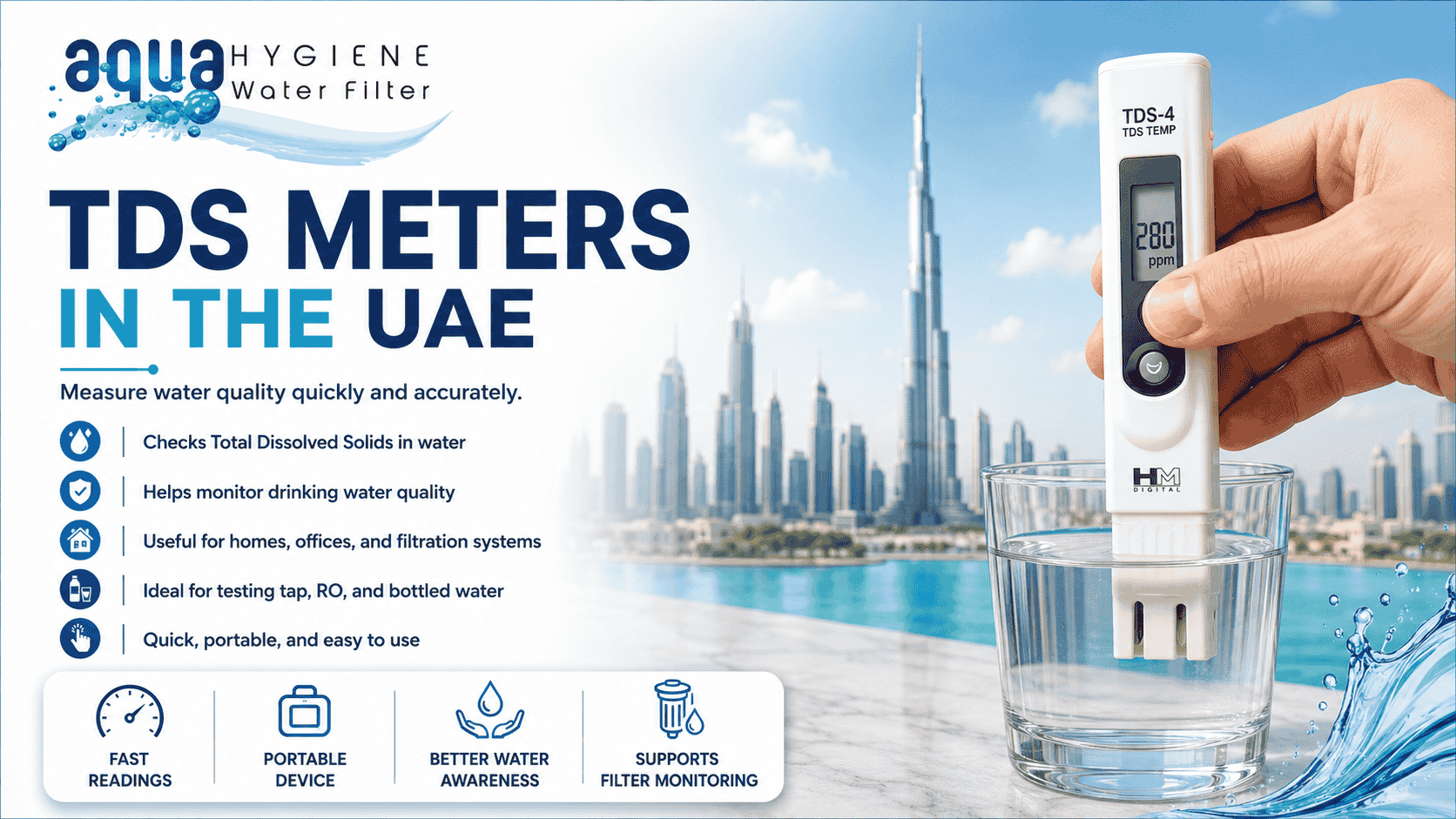
Tap water looks clean in a glass. But "clear" and "clean" aren't the same thing. Every source of water, whether it comes from a well, a desalination plant, or your city supply, carries dissolved particles too small to see. These are called Total Dissolved Solids (TDS), and some of them are harmless (even beneficial), while others can affect taste, pipes, and health at high enough concentrations.
If you live in the UAE and have wondered whether a TDS meter is worth owning, this guide covers what TDS actually is, how a TDS meter works, what the numbers mean, and when you need more than a meter to know your water is safe.
What Are Total Dissolved Solids (TDS)?
TDS refers to the combined concentration of all inorganic and organic substances dissolved in water, measured in parts per million (ppm) or milligrams per liter (mg/L), the two units are numerically equivalent. Common contributors include:
- Minerals — calcium, magnesium, potassium
- Salts — sodium chloride and related compounds
- Bicarbonates and carbonates
- Sulfates and chlorides
- Trace organic matter
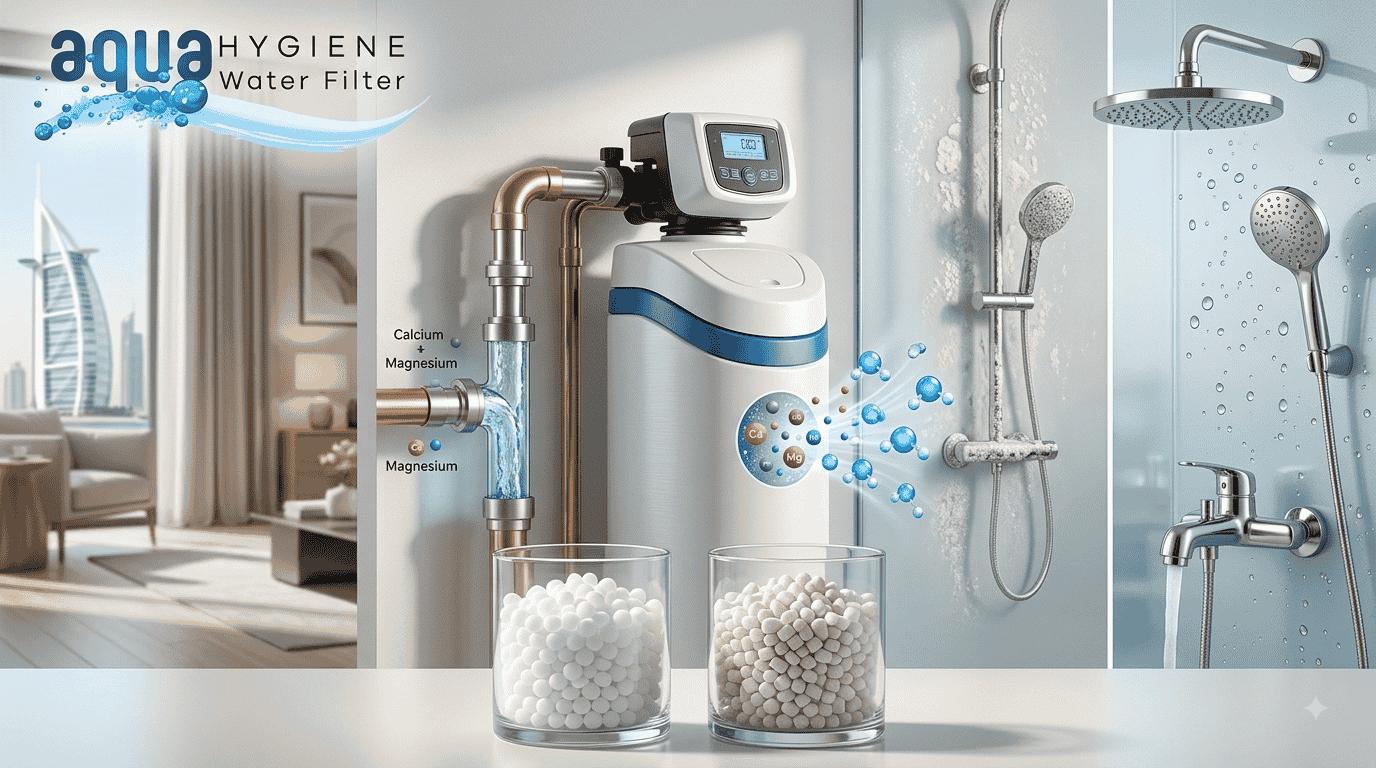
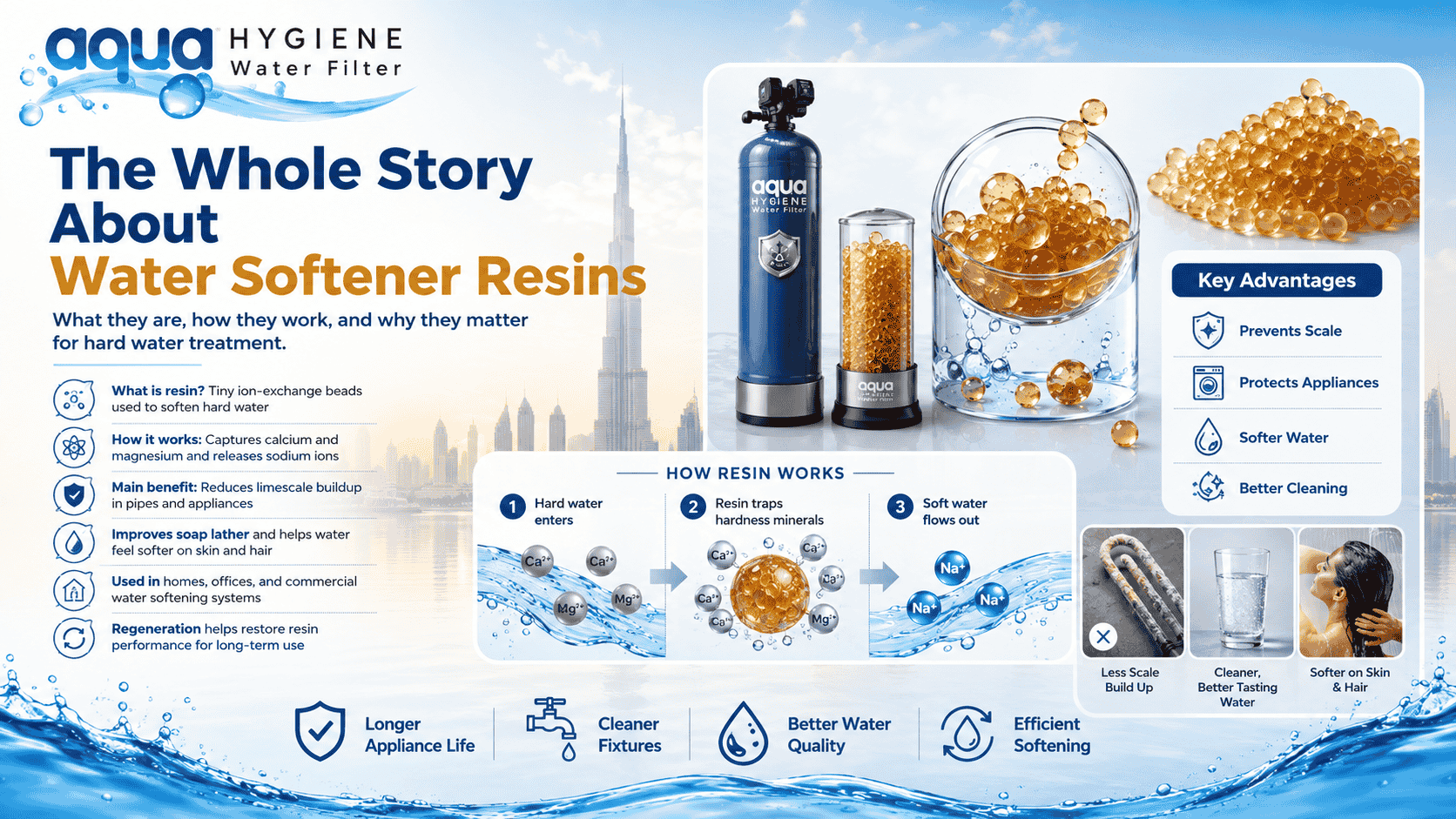
These enter water naturally as it passes over rock and soil, and additionally through agricultural runoff, rainfall, industrial discharge, and in the UAE specifically, the desalination process itself, which can leave water either very low in minerals (if under-treated) or elevated in dissolved salts depending on the plant and distribution network. Water with a high mineral content is commonly referred to as "hard water."
Do Water Filters Remove TDS?
Not always, and this is the point most people get wrong.
Standard multi-stage carbon or sediment filters are designed to trap particulates, chlorine, and some organic compounds, but dissolved minerals and salts are chemically dissolved, not suspended, so they pass straight through most filter media. You can install a filter and see almost no change in your TDS reading.
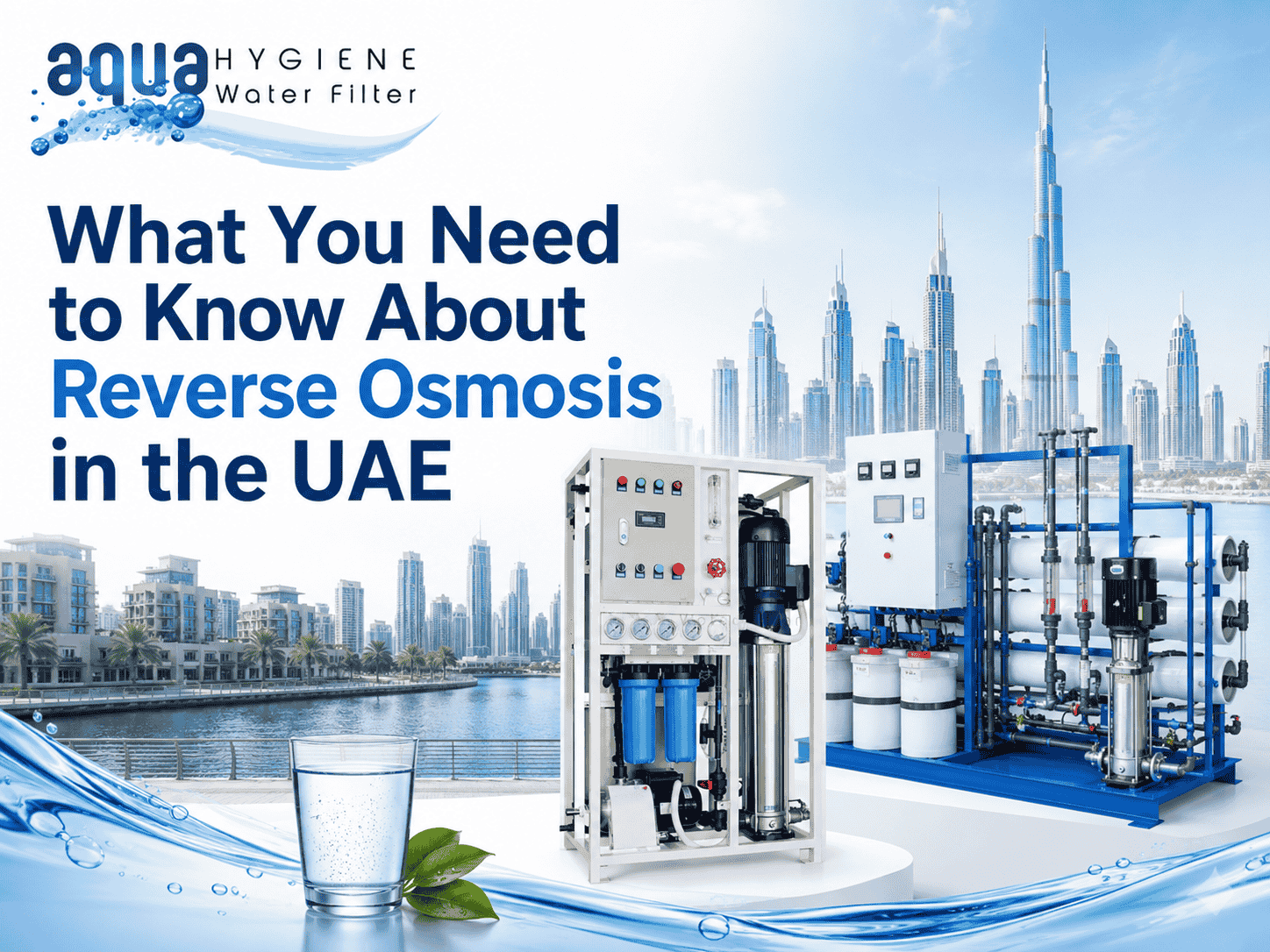
Reverse osmosis (RO) is the exception. RO systems force water through a semi-permeable membrane fine enough to block the vast majority of dissolved salts and minerals, typically reducing TDS by 90–99%. This is why RO units, often paired with carbon pre- and post-filters, are the standard setup for households that want both low TDS and good taste.
Is High TDS Dangerous?
TDS itself isn't a specific contaminant, it's a general indicator of mineral and salt concentration. Regulatory guidance typically frames it like this:
| TDS Level (mg/L) | General Assessment |
|---|---|
| Below 300 | Excellent |
| 300–600 | Good |
| 600–900 | Fair |
| 900–1,200 | Poor |
| Above 1,200 | Not recommended for drinking |
The World Health Organization notes palatability tends to drop noticeably above roughly 600 mg/L, and water above 1,000 mg/L is generally considered unsuitable for drinking on taste and health grounds. The U.S. EPA's secondary (aesthetic, non-enforceable) standard sets 500 mg/L as the recommended ceiling for taste.
A high number alone doesn't mean the water is unsafe, it means there's a lot dissolved in it, and the specific composition matters more than the total. A low number doesn't guarantee safety either, TDS meters can't detect bacteria, viruses, heavy metals like lead, pesticides, or most industrial chemicals, since many of these are present at levels far too low to register on a basic meter.
TDS also affects:
- Taste — water in the roughly 100–300 mg/L range is generally perceived as pleasant; very low TDS can taste flat, and very high TDS can taste salty, bitter, or metallic.
- pH balance — very low-TDS water tends to be more acidic and can be more corrosive to plumbing and appliances over time; very high-TDS water can trend alkaline.
How Does a TDS Meter Work?
A TDS meter is a small handheld device that estimates dissolved solid concentration by measuring the electrical conductivity of a water sample, dissolved ions conduct electricity, so more dissolved solids generally means higher conductivity. The meter converts that reading into an approximate ppm value on a digital display.
To use one: turn it on, dip the probe into a water sample, wait a few seconds for the reading to stabilize, and record the number. It's genuinely that simple, which is part of why the devices are popular for quick, repeatable home checks.
Where TDS Meters Are Useful Beyond Drinking Water
- Aquariums — many fish and coral species need TDS within a narrow range
- Hydroponic systems — nutrient concentration is tracked via TDS/EC
- Gardening and irrigation — high-salinity water can stunt plant growth over time
- Swimming pools and spas — balances water chemistry alongside chlorine and pH
- RO system maintenance — a rising TDS reading on the output side is often the first sign a membrane needs replacing
What a TDS Meter Can't Tell You
This is the part most product pages leave out. A TDS meter cannot detect:
- Bacteria, viruses, or other pathogens
- Heavy metals (lead, arsenic, etc.) at low but harmful concentrations
- Pesticides, herbicides, or petroleum residues
- Most disinfection byproducts
These require laboratory testing or certified test strips designed for the specific contaminant. Think of a TDS meter as a quick screening tool, not a certificate of safety.
Frequently Asked Questions
Is a TDS meter accurate? It's accurate for what it measures, conductivity-based estimation of dissolved solids, typically within a small margin of error for household use. It is not a substitute for certified lab analysis.
What's a good TDS reading for drinking water? Generally under 300 mg/L is considered good, and under 500 mg/L is within most taste and aesthetic guidelines. Context (source water, local regulations) still matters.
Does boiling water reduce TDS? No, boiling can kill pathogens but concentrates dissolved solids as water evaporates, so TDS can actually rise slightly.
Should I buy a TDS meter if I already have an RO system? Yes, it's the easiest way to monitor membrane performance and know when it's time for a filter or membrane change.
The Bottom Line
In a market like the UAE, where water sources range from desalinated municipal supply to well water, a TDS meter is a cheap, fast way to keep an eye on what's in your water and whether your filtration system is doing its job. It won't catch everything pair it with proper filtration (RO for dissolved solids, carbon for taste and chlorine) and periodic lab testing if you want a complete picture of water safety, not just a snapshot of mineral content.