

Blog
The Whole Story About Water Softener Resins

Ensuring that our homes' water is free of harsh minerals is vital for water softeners. In the UAE, where water quality can change, it is important to use a water softener to keep home appliances in good shape and ensure drinking, cleaning, and bathing water is clean. At the heart of every water softener system is "softener resin," sometimes called "cation resin." We will discuss softener resins, how they work, and why they are important for improving your home's water.
What You Need to Know About Water Softeners
In the UAE, as in many other places, the water supply often contains dissolved minerals like calcium and magnesium. This kind of water is often called "hard" water. Minerals like these can build up in lines, making soaps and detergents less effective. Water softeners are made to remove them.
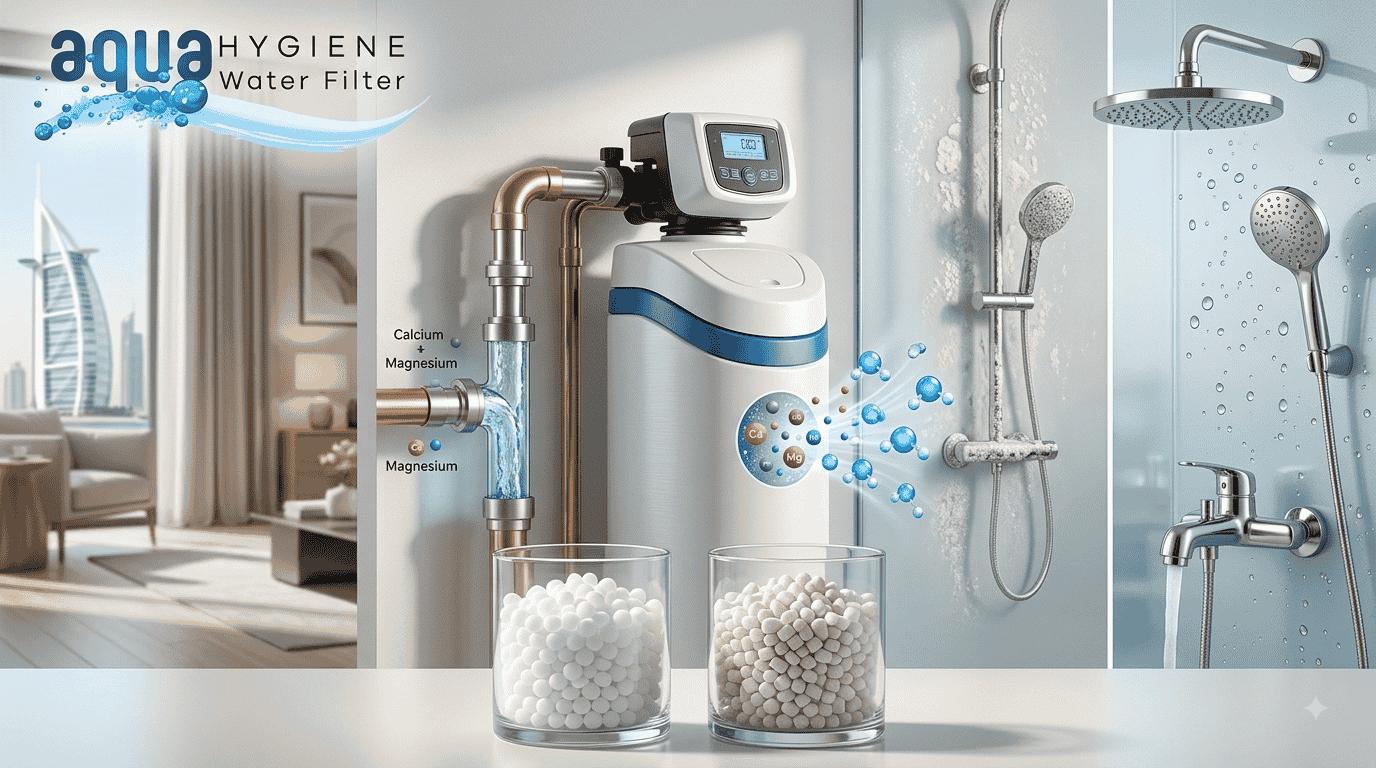
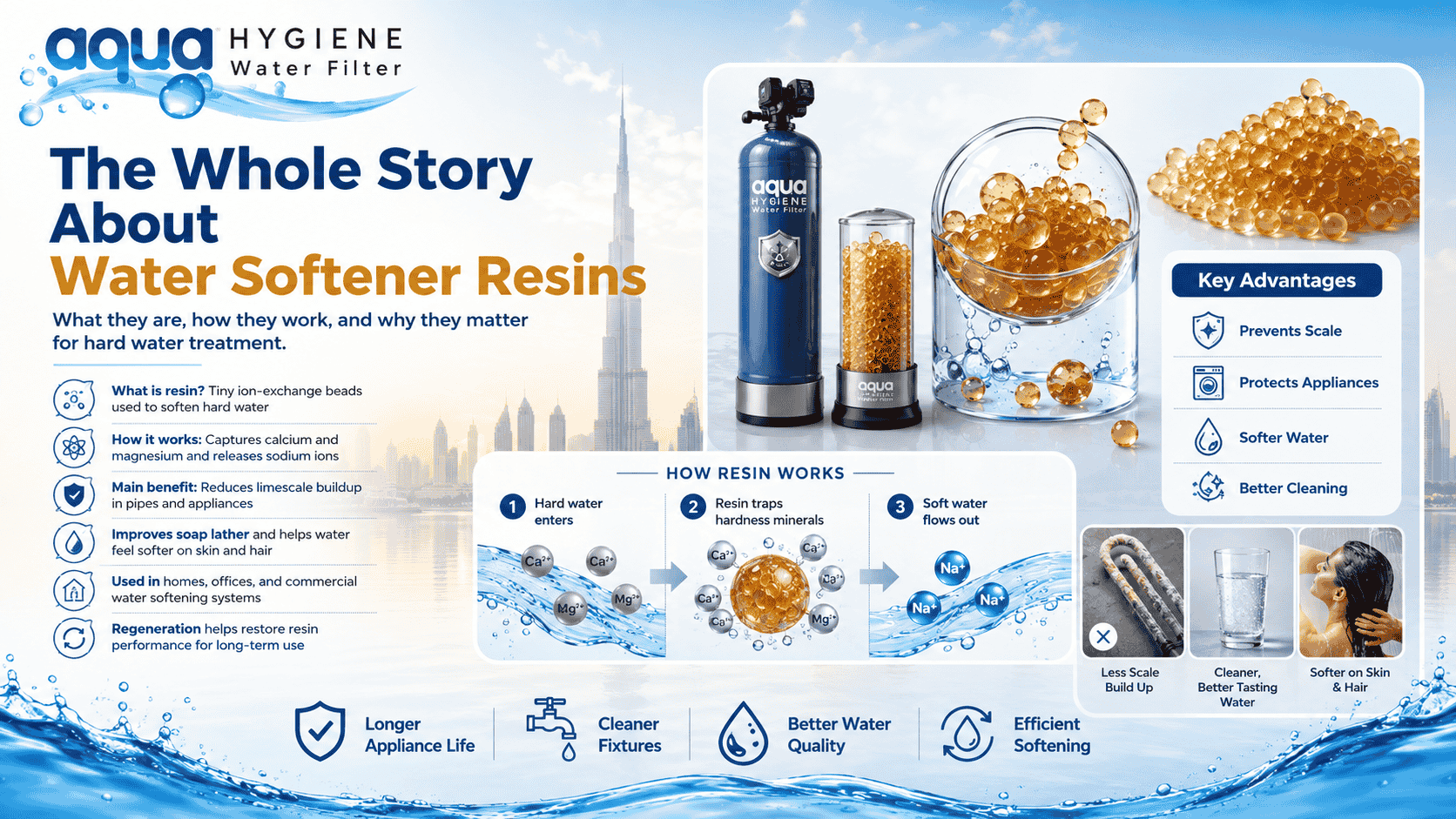
A typical water softener has two major parts: a smaller brine tank and a taller resin tank. The resin tank contains small resin beads, while the brine tank contains a saltwater solution. Tubing connects the two tanks, and some systems have a pre-filter to get rid of big particles in the water before they get to the softener.
How Ion Exchange Works
Ion exchange is what makes water softeners work. The minerals in hard water have a positive charge, while the resin beads in the water softener tank have a negative charge. As the water flows through the resin tank, the positively charged minerals are drawn to the beads and stuck, taking them out of the water. After being softened, the water goes through the plumbing system and gets to your faucets, washing machines, and other devices as clean, mineral-free water.
Softener resins can be used on many different minerals and substances, such as
- Calcium
- Magnesium
- The salt
- Potassium
- Sulfates
- Chlorides
- Phosphates
Do You Know What Water Softener Resins Are?
The strong, food-safe stuff that water softener resins are made of is called crosslinked polystyrene divinylbenzene or polystyrene sulfonate. Because these beads are hollow, they have a lot of surface area that can hold mineral ions. They come in various colors, from white to shades of brown and tan. More than half of the beads are less than a millimeter across, but some are as small as 0.3 mm.
Resins are important not only in home water softening systems but also in fields that require clean water, such as pharmaceuticals, gardening, and manufacturing.
What Kind of Resin Does a Water Softener Need?
How much resin a water softener needs depends on how big and how much water it can soften. For instance, a small portable water softener might need about half a cubic foot of resin, while a bigger system might need the whole thing. How long the glue lasts depends on the type of water used and how much it is used, but if it is taken care of, it can last for years. To keep the glue working well, it needs to be regenerated regularly, which is what we'll talk about next.
Can Resin Grow Again?
Once in a while, the resin beads in a water softener can get too full of minerals and stop softening water. They can be fixed, though, using a process that includes the brine tank. The salty water from the brine tank is pumped through the resin tank. This recharges the beads by replacing the minerals that get stuck with sodium ions, allowing the plastic to soften water again.
Most modern water softeners regenerate naturally. However, some smaller systems, like those in RVs, may need to be recharged by hand.
What is the Best Place to Get Water Softener Resin?
When it's time to change the resin in your water softener, it's easy to find new resin at companies that treat water, like Aqua Hygiene in the UAE. Resin comes in various forms, such as loose bits and cartridges, and in different amounts to fit different systems. Talk to a professional to determine which resin will work best for your water softener needs.
Final Thoughts
Water softener resins are the unsung heroes of water purification devices. This is especially true in places like the UAE, where water quality can be problematic. You can enjoy clean, soft water for many years if you know how these resins work and take good care of your water softener system. Aqua Hygiene has reliable options to fit your needs, whether you want to set up a new system or replace the resin with an old one. Buy good water softener resins to keep your water soft, your appliances running easily, and your family healthy.